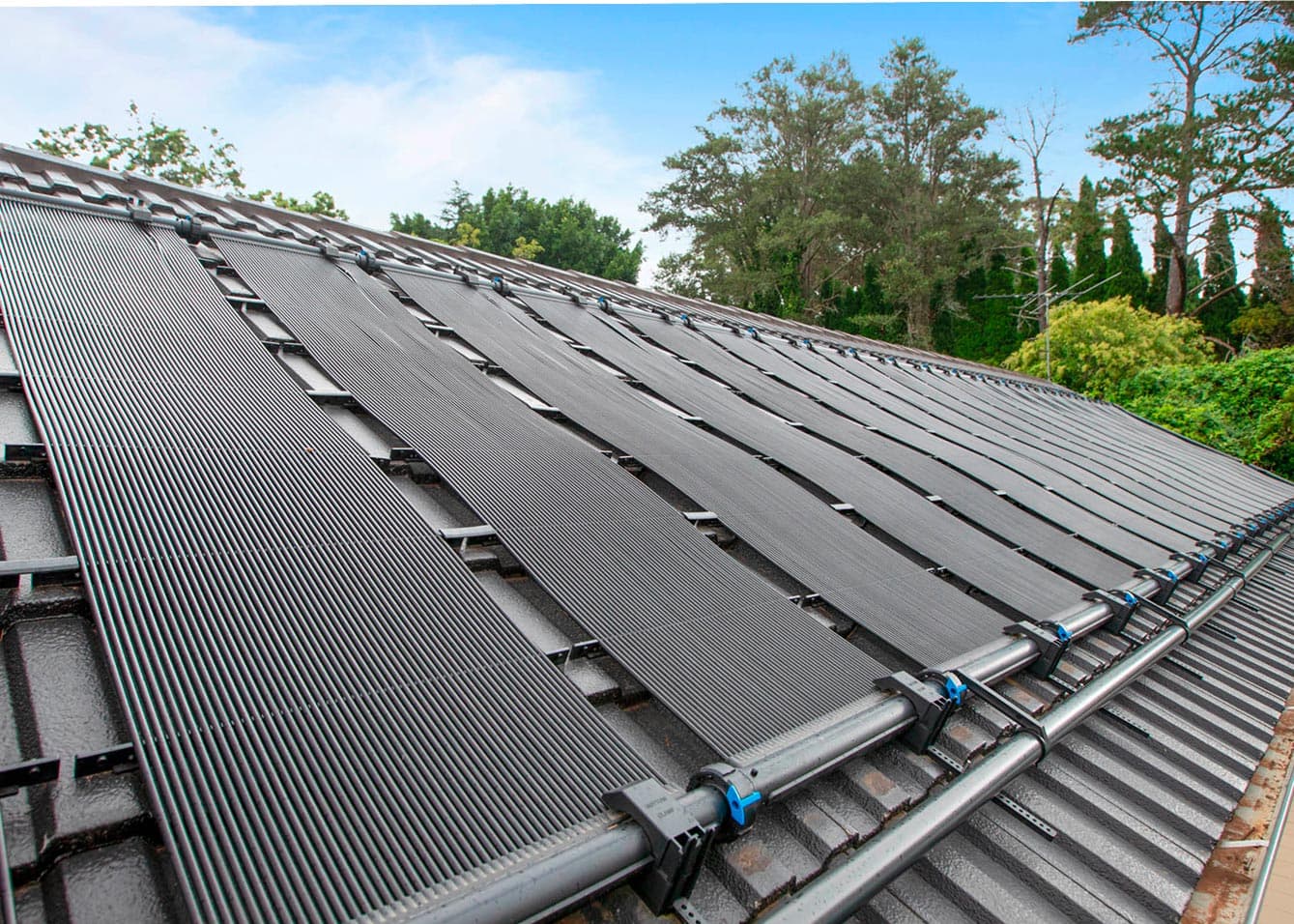
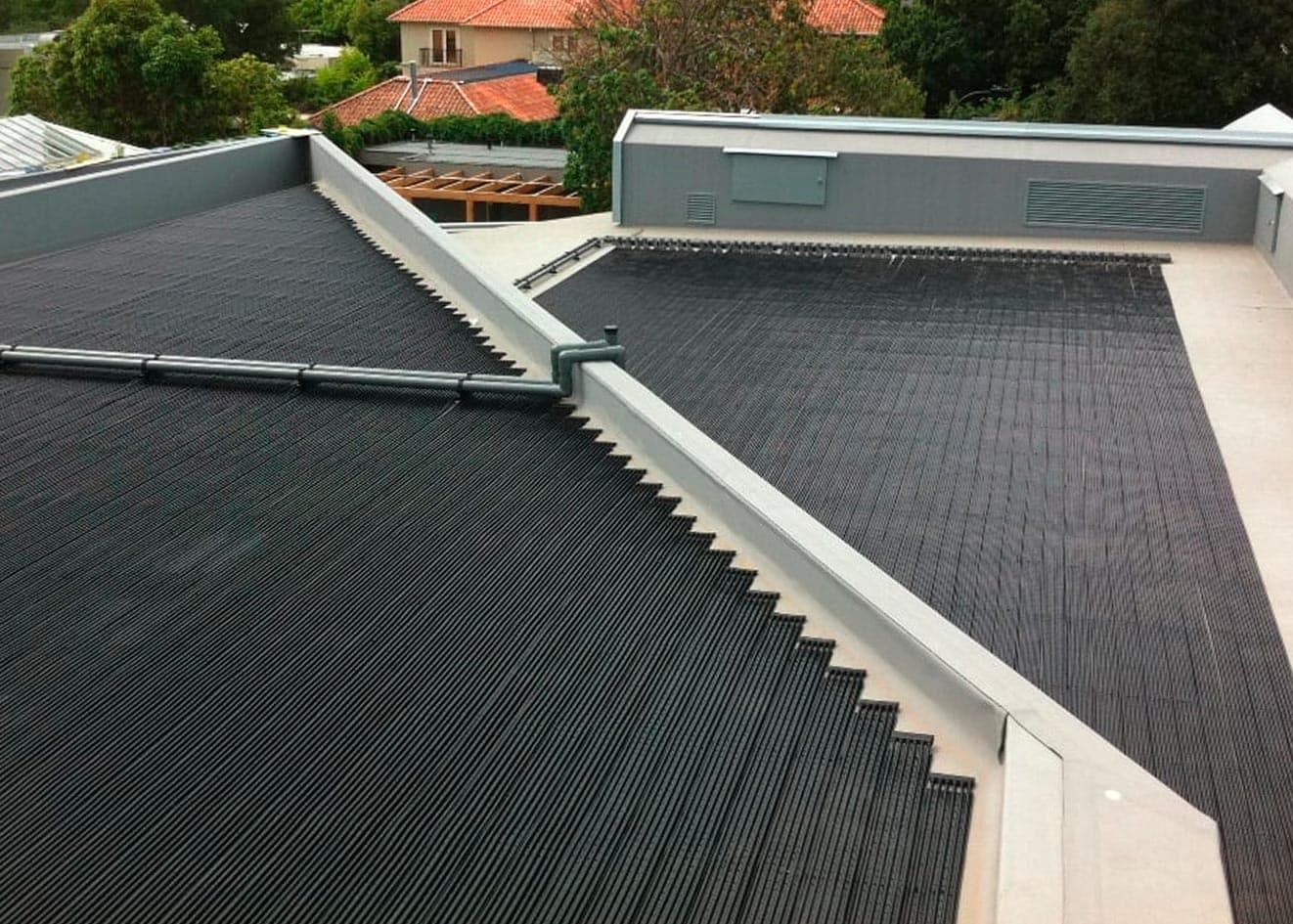
Cut evaporation first
Evaporation is the biggest loss by far, because every litre that leaves takes its heat with it, and it happens whenever the water is warmer than the air. With a cover on it drops to almost nothing.
Evaporation48%


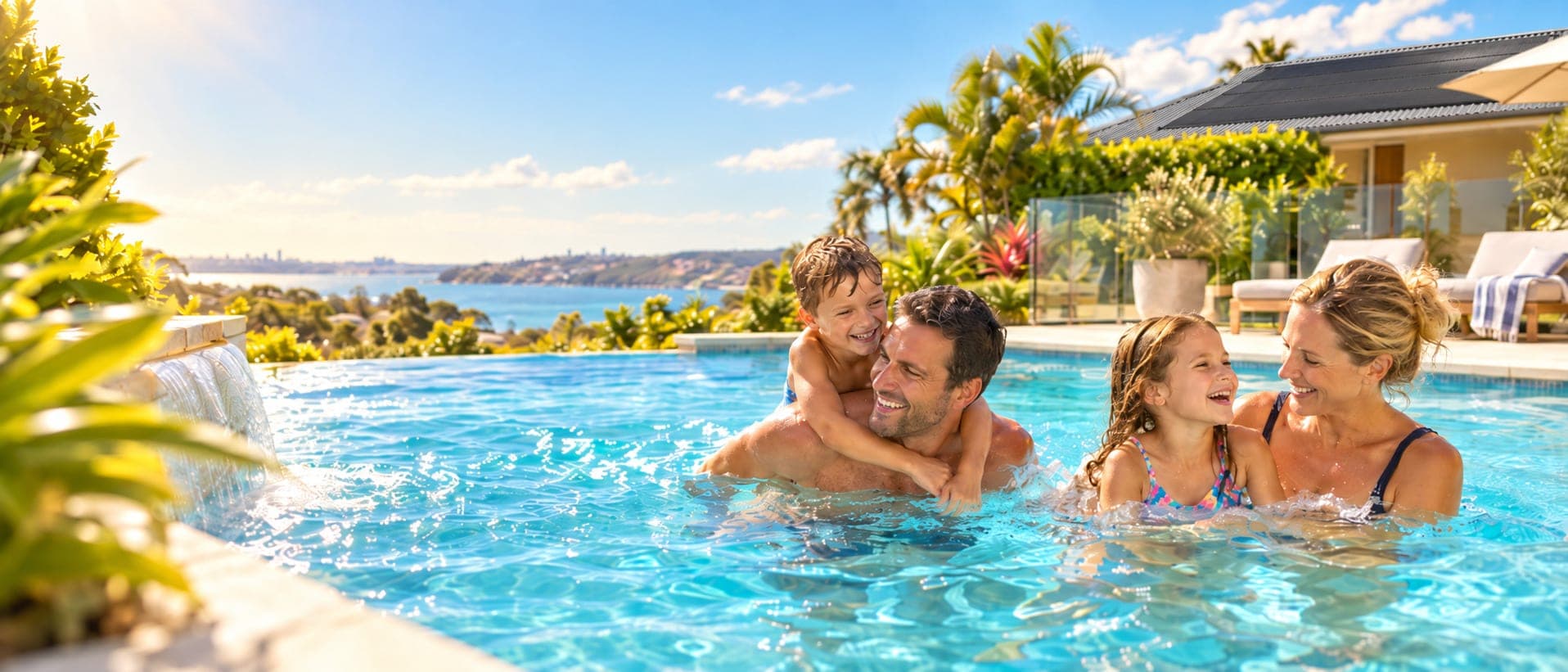
Practical tips to lower your pool heating costs and swim for longer, from the DuoFlow team who service solar, heat pump and gas systems every week.
Turn the setpoint down a couple of degrees. It is the cheapest change on this page, because every degree above what you need costs money. A pool loses heat faster the bigger the gap between the water and the air, so a pool held at 30 degrees loses heat faster than the same pool at 27 in the same weather and takes more energy to keep there.
Start at the low end of the range that suits how you swim and only go up if it is not enough. Most families find the mid to high 20s comfortable for everyday swimming. Lap swimmers usually want it a degree or two cooler, and young children and hydrotherapy sit higher.
Concerned about your pool temperature?

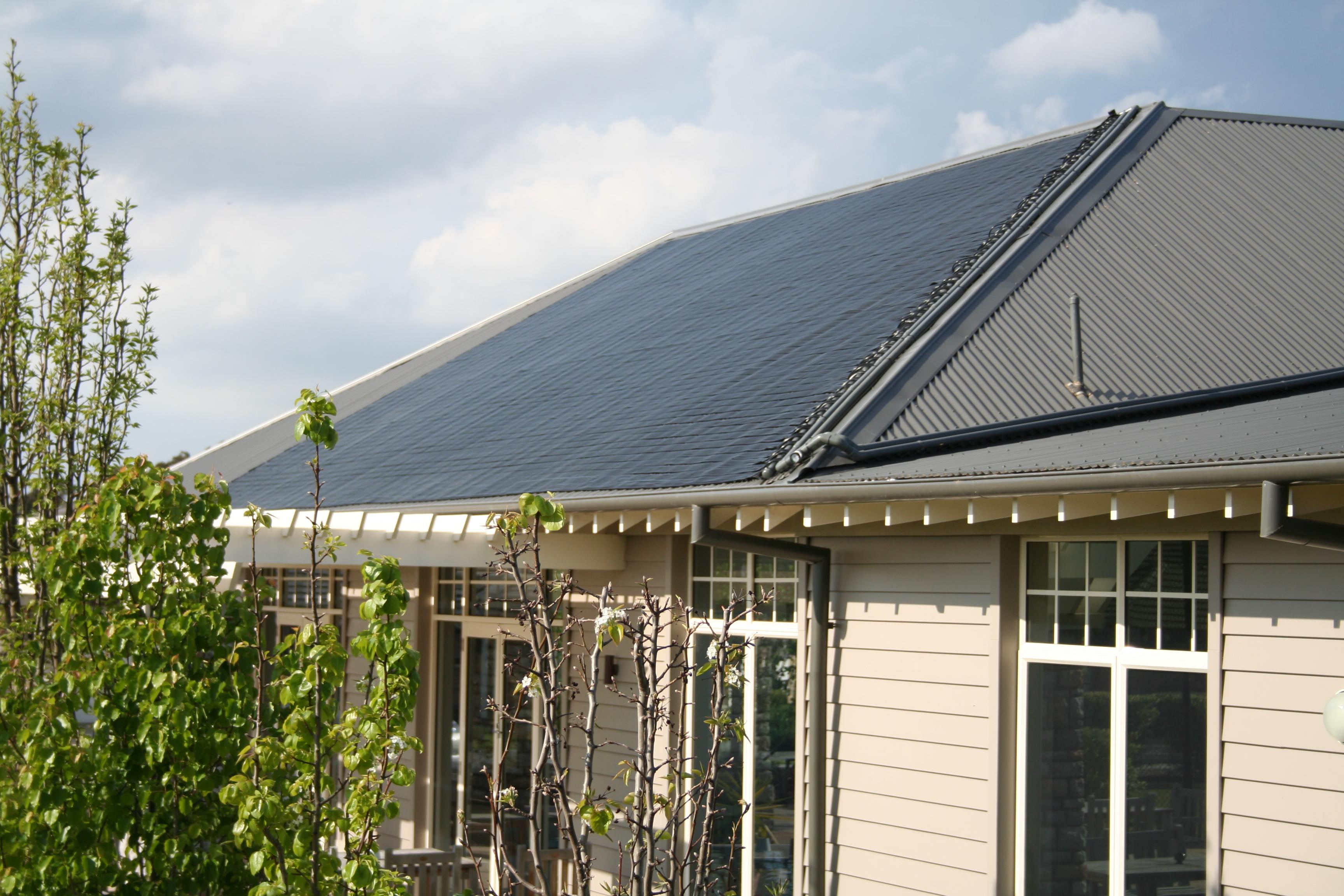
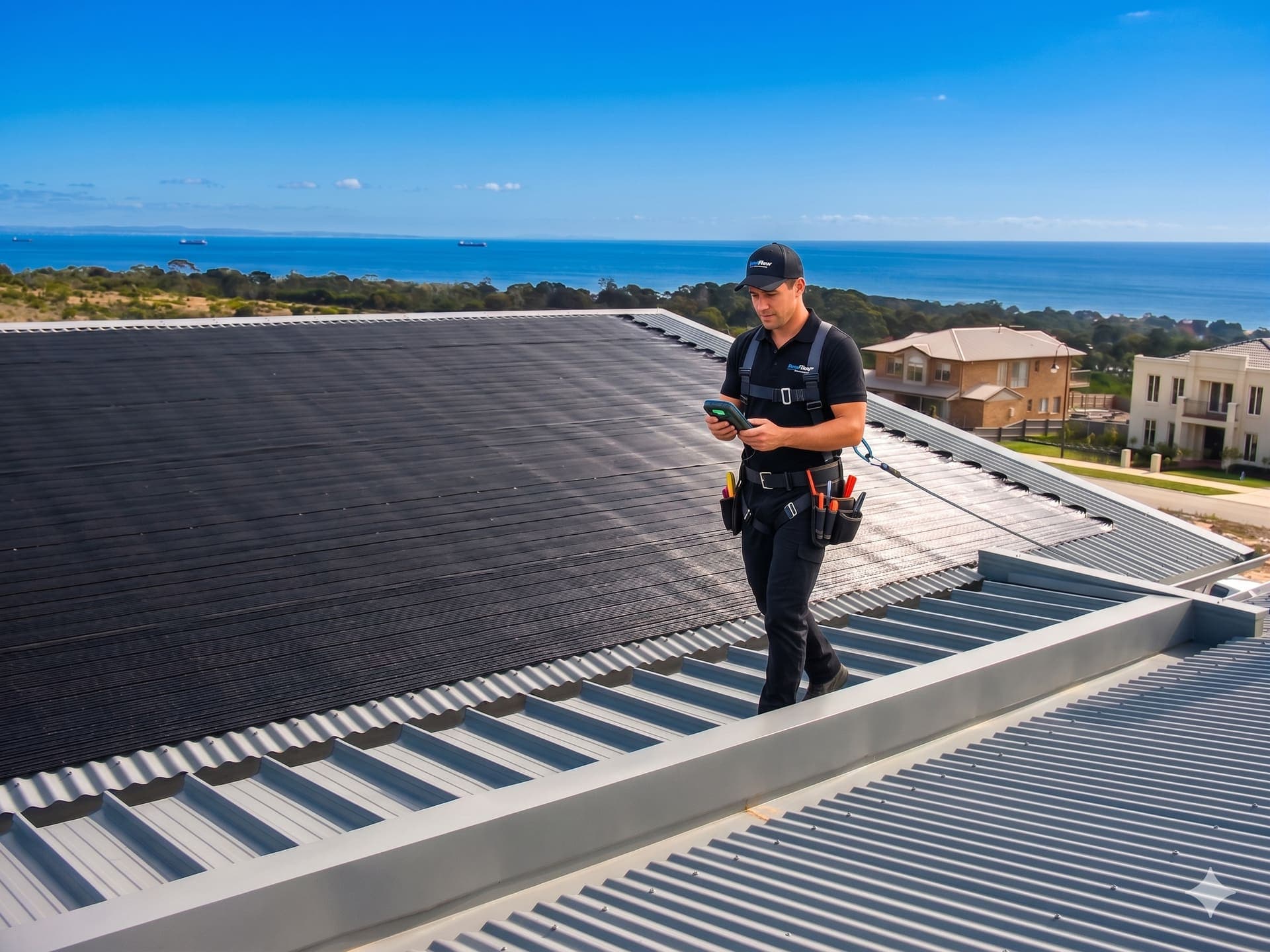
Solar is the cheapest heat you can put in a pool, but the pump does not run all the time. It stops when the pool has reached temperature or the roof is not warm enough, which can look like a fault even on a sunny day. Here is how the controller decides when to run, and the few things that really do stop it collecting heat.

Auto is the mode that saves you money. Two sensors, one on the roof and one in the pipework, and the pump only starts when the roof is 6 degrees warmer than the water, stopping when the gap closes to 2. Pumping pool water over a cold roof would cool the pool, so the controller waits.

It means the pool has reached its set temperature and the controller has dropped into Energy Saving mode. The pump rests for 2.5 hours, runs for 3 minutes to check the water, then rests again. It is not a fault. It is saving you pump power.
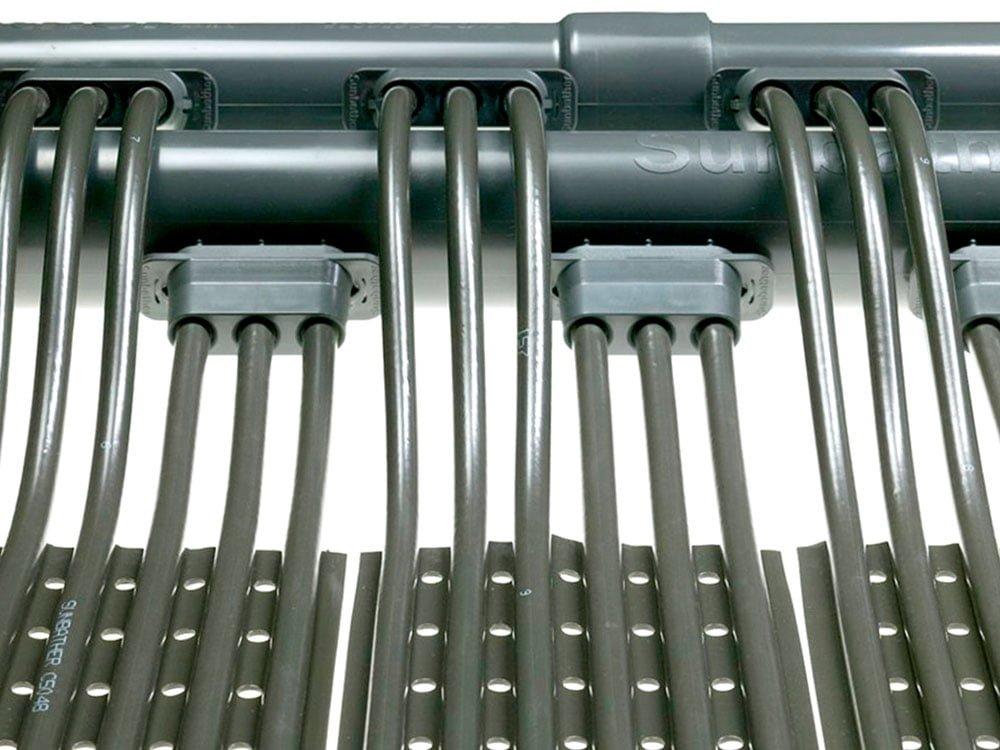
If the pool never reaches temperature on sunny days, this is the usual cause. A shaded, dislodged or failed roof sensor means the controller never sees a warm roof, so it never starts. A "00" roof reading usually means the sensor is damaged or open circuit, and corroded joins in the wire give false readings too.
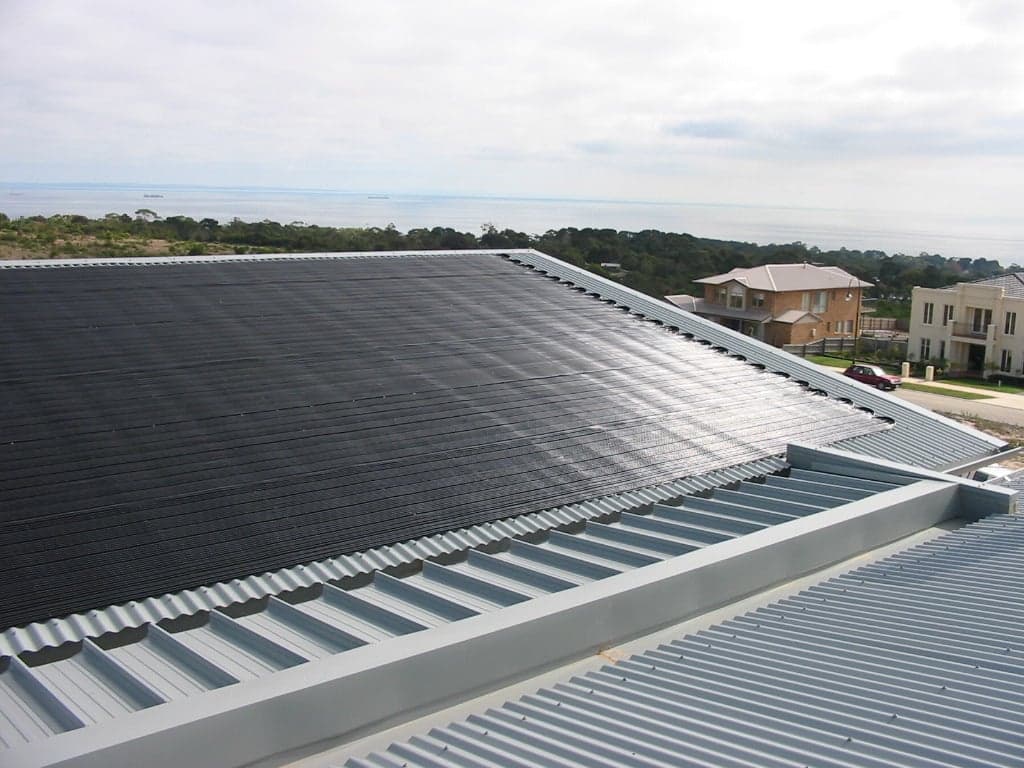
Leaves, moss and roof grit sitting on the strips cut how much heat they collect. The webbing between the strips is there so dew evaporates and rain drains away, and it can only do that if it is clear.
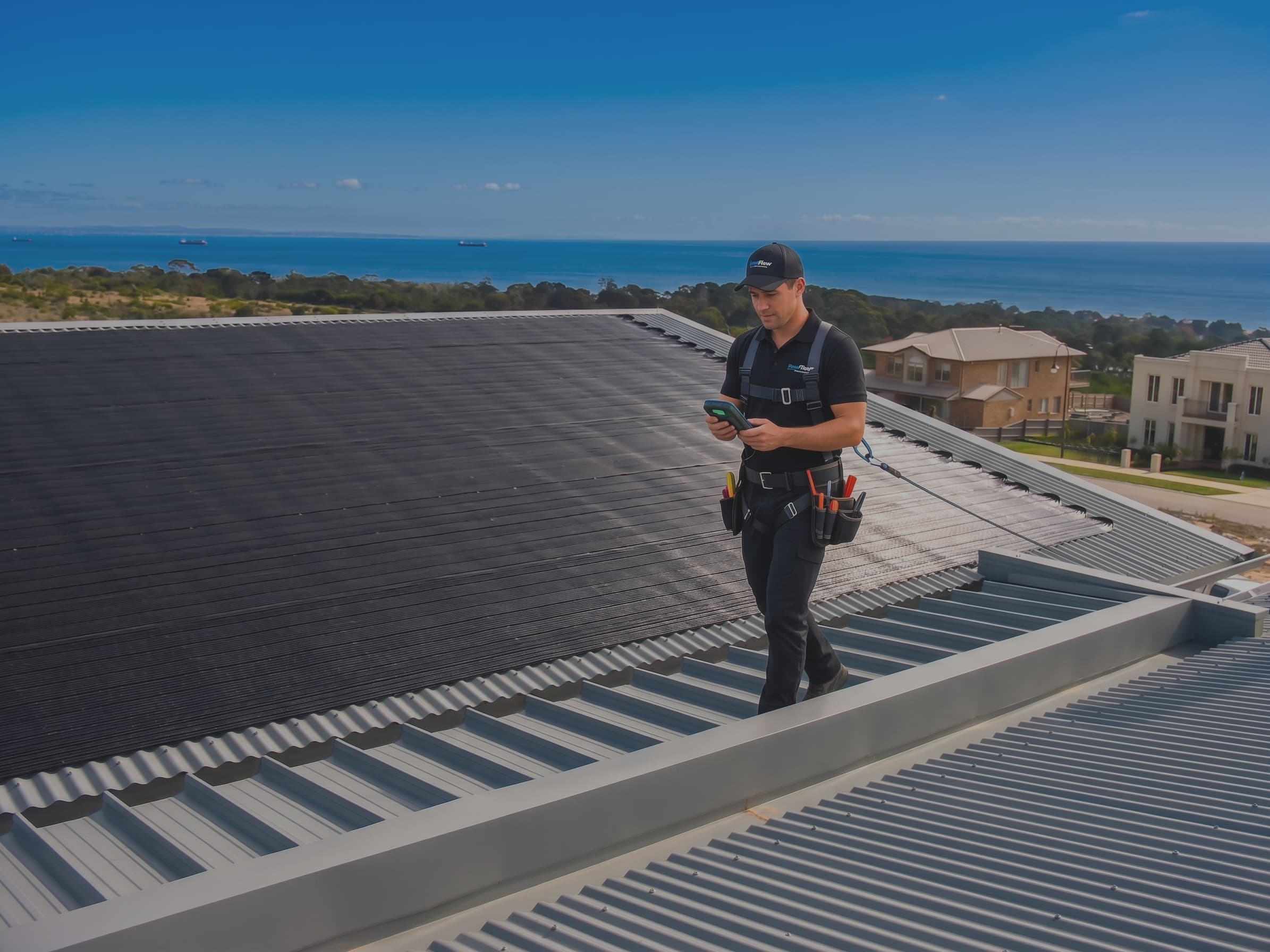
At the end of the season put the controller in Winter mode. It runs the pump for 10 minutes a day to keep water moving through the collector. A system left in Auto over winter is fine. A system switched off with water sitting in the strips is not.
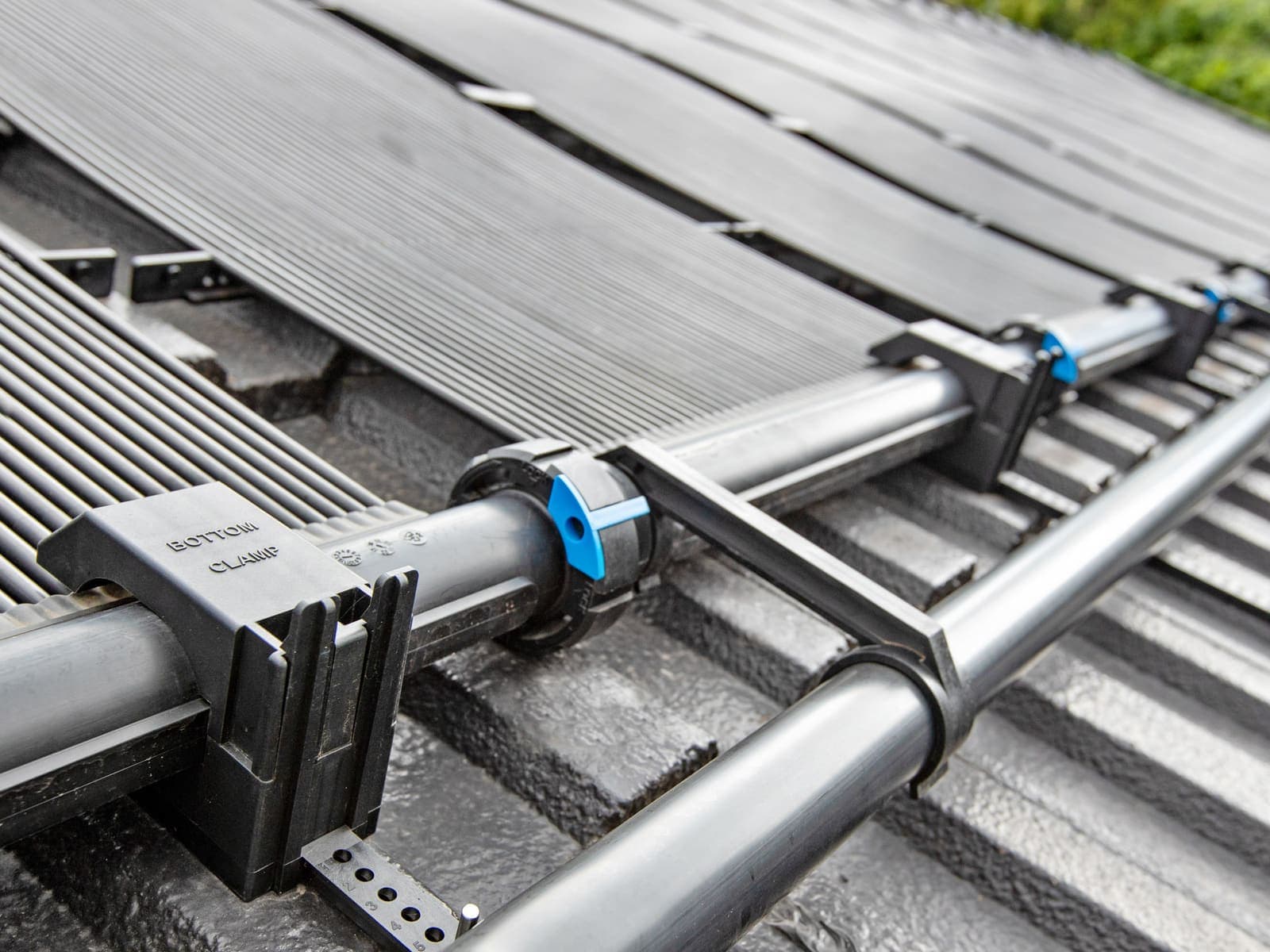
The SunSwitch is not designed to switch variable speed or DC pumps. If your filtration pump has been replaced with one and wired through the solar controller, it is a fault waiting to happen. Worth a look before it fails.
Pool temperature still not right?
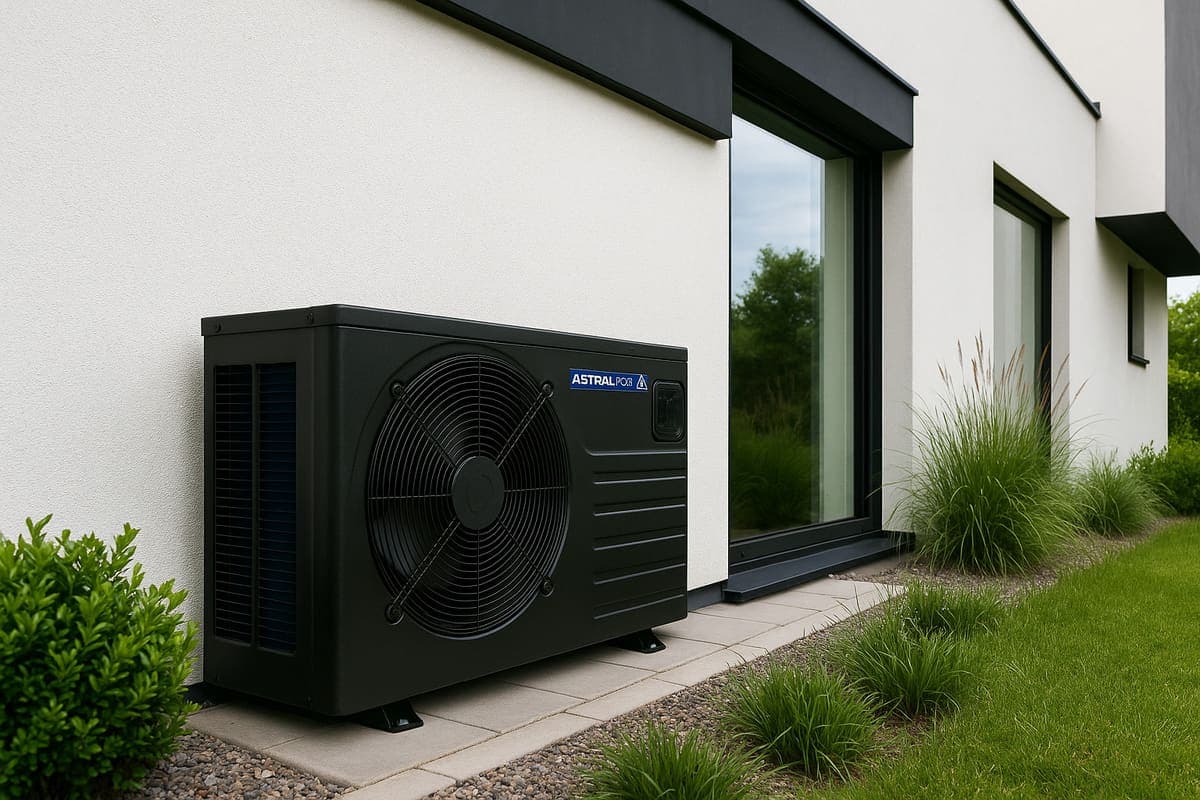
Run it through the warmest part of the day, put it on an off-peak or solar PV tariff if you have one and cover the pool overnight. Give it airflow too. A unit boxed in or with a blocked coil works harder for less heat.
The reason is how a heat pump works. It moves heat from the air into the water rather than making it, so it is cheap to run in warm weather and dearer as the air cools. Industry figures put a typical unit at around 7 units of heat for every unit of electricity on a 27 degree day, dropping to around 5 at 15 degrees. Same warmth, roughly 40% more to buy it. Treat those as a guide, because pool size, tariff and how exposed the unit is all move the number.
In practice a Melbourne heat pump costs between $2 and $8 a day to run, depending on the pool and the season. An inverter unit, which slows down to hold temperature instead of switching fully on and off, is quoted at around 30% cheaper to run than an on/off unit of the same size.
Having heat pump problems?
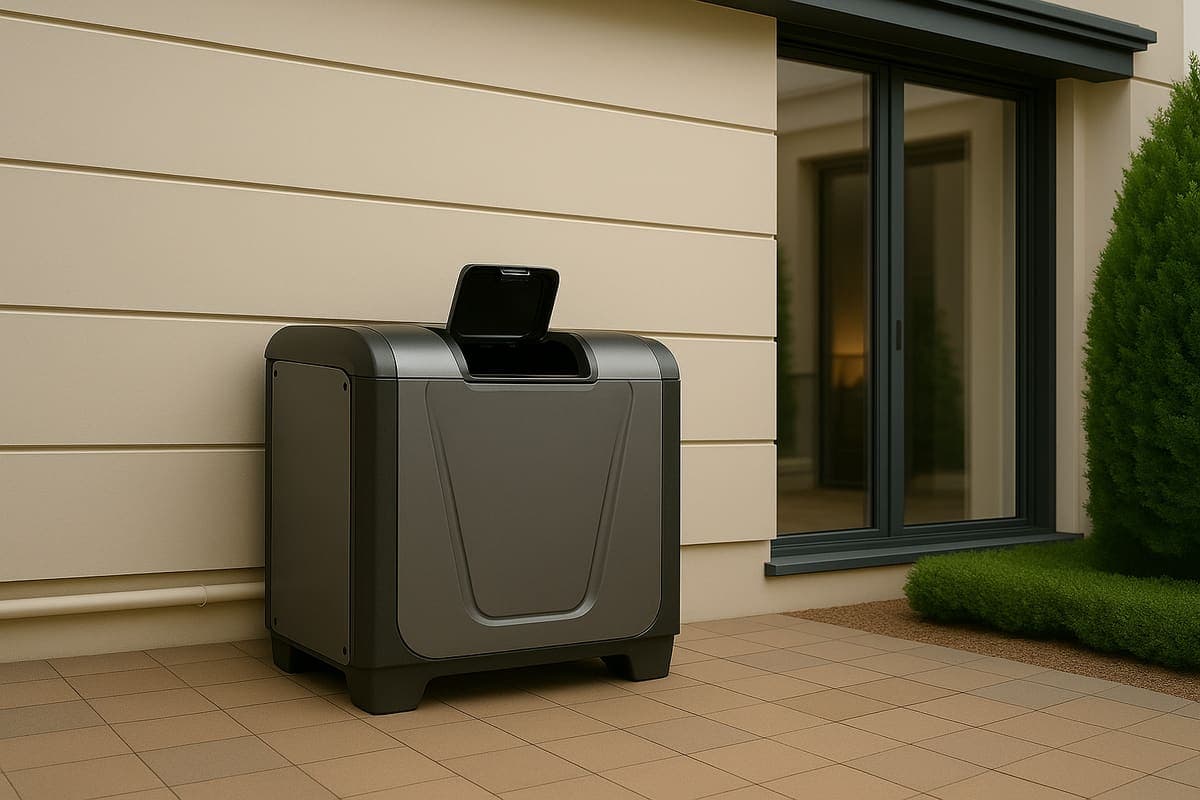
Heat the pool up for the weekend, then let it go. Gas gives you fast heat on demand, which makes it the right choice for a spa, or a pool used now and then rather than every day. It is also the most expensive heat per degree, so holding a pool warm all season on gas is the dearest way to swim.
If you do run gas, cover the pool overnight. Every degree lost after dark is bought back with gas the next day.
Gas heater playing up?
An uncovered pool loses almost all its heat through the surface, by day and by night. A cover deals with the two biggest losses, so whatever heater you run has less to make up.
Evaporation is the biggest loss by far, because every litre that leaves takes its heat with it, and it happens whenever the water is warmer than the air. With a cover on it drops to almost nothing.
Cover it before dark. Once the sun is off the water the pool radiates heat straight up into the night sky, and clear, still nights are the worst. That is how a pool at 28 degrees at 4pm ends up at 24 by morning without a breath of wind.
A bubble cover (often called a solar cover) adds a little heat from the sun as well as holding it. A thermal cover only holds it. Sunbather recommends thermal for a heated pool, so the water does not overheat on a hot day.

A cover only works while it is on. If it takes two people and five minutes to get off, it will spend most of the summer on the deck. A roller fixes that.

Put something between the pool and the prevailing wind. Fencing, a hedge or a screen all work. Wind strips the warm layer of air off the surface and replaces it with cooler air, so the water keeps giving up heat.
Heater working harder than it should?
Solar can virtually double the swimming days in a year. Getting there is as much about timing as equipment, and most owners switch on too late and give up too early.


Put the controller in Auto from the first warm roof days, not the first hot week. If nothing has happened after a fortnight of decent weather, get it looked at.

Leave the setpoint alone. In a heatwave a controller with a Heat and Cool mode runs the pump at night to shed the extra heat.

Keep it in Auto. The roof still warms on a sunny day long after the air has cooled, so solar keeps adding heat well into April on the Peninsula.

For a reliably warm pool through October and April, a heat pump on top of solar does the top-up while solar does the bulk.

Switch to Winter mode and book the annual service, so the system is ready for the first warm week of spring.
Off-peak service pricing runs 1 May to 30 September.
Book the annual service over winter, while it is off-peak and before you need the pool. Sunbather recommends a check-up every year for every solar system, and the DuoFlow annual winter service is how that gets done locally. We clear debris and drainage, check the collector and roof pipework for leaks, test the vacuum break valve, pressure gauge, pump and flow, test both sensors, recalibrate the controller and leave you a written system health report.
The faults it picks up are the ones that show up in spring as "the pool is not heating". Cheap to fix in July, expensive to find in November.
Three plans, from $235 off-peak.
Short answers to the questions we hear most. If yours is not here, ask when you enquire.
Because almost all of it leaves through the surface. Evaporation is the biggest loss during the day and in wind, and radiation to the night sky is the biggest loss after dark, especially on clear nights. Together they account for around 80% of what an uncovered pool loses. A cover addresses both.
Make sure the solar controller is in Auto, so it starts recovering the loss as soon as the roof is warm the next morning. A cover on overnight helps too. It cuts overnight cooling by 3 to 4 degrees and stops the evaporation that carries on after dark.
Lower than you think. Most families are comfortable in the mid to high 20s, lap swimmers prefer it a little cooler and young children and hydrotherapy sit higher. Every degree above what you need costs money, so start at the low end of the range that suits you and go up only if it is not enough.
ES is Energy Saving mode, not a fault. The pool has reached its set temperature, so the controller rests the pump for 2.5 hours, runs it for 3 minutes to check the water, then rests again. It will resume heating on its own when the water cools.
Check the display first. If it shows ES the system is working. If it is in Auto and the pump is not running, the usual cause is the roof sensor. If it is shaded, dislodged or failed the controller never sees a warm roof and never starts. A "00" roof reading points to a damaged sensor. That is a quick repair.
At the end of the swimming season, once the roof is no longer warm enough to add heat. Winter mode runs the pump for 10 minutes a day so water keeps moving through the collector. Switch it back to Auto in spring. Do not simply turn the system off with water sitting in the strips.
In warm weather, no. A heat pump draws heat from the air, so a typical Melbourne unit costs somewhere between $2 and $8 a day depending on pool size, air temperature and your tariff. It gets dearer as the air cools, which is why running it in the warmest part of the day and keeping a cover on make such a difference.
Yes. On the Mornington Peninsula and Bayside a solar system in Auto with a cover on will usually give you swimmable water from October into April. Sunbather puts it as virtually doubling the swimming days in a year. A heat pump on top of solar stretches it further in the shoulder months.
Once a year. Sunbather recommends an annual check-up for every solar system, and DuoFlow does these over winter at off-peak pricing from 1 May to 30 September. The service catches sensor, leak, flow and valve faults before they cost you a spring of cold water.

Don't let a cold pool ruin your swim. Contact DuoFlow today to book your service, request a quote, or discuss your pool heating needs.
Servicing Bayside, the Mornington Peninsula, and Greater Victoria from our base in Somerville – Get in touch today!